IPv4 Address Space Reclamation: A Guide For Network Administrators
发布于 July 24, 2024 經過 Admin
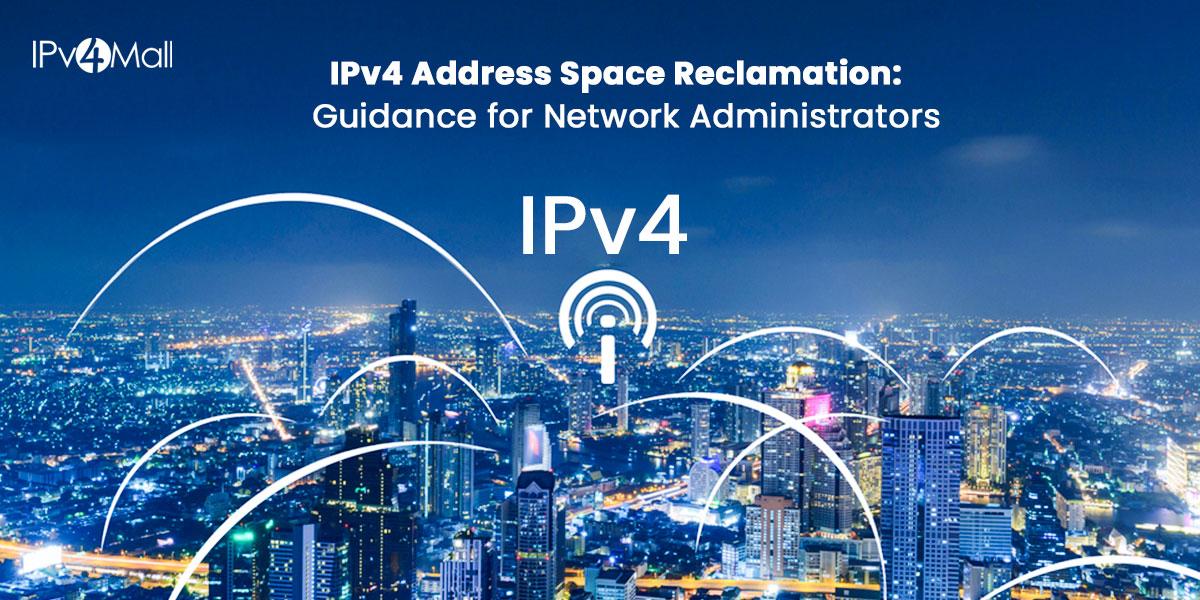
Like every resource that’s running low, IPv4 addresses should be managed wisely and strategically. In the 1980s, people did not expect 4.3 billion unique addresses to run out so quickly, but it’s 2024, and unfortunately, they have. This guide aims to provide a comprehensive overview of IPv4 address space reclamation, offering practical strategies to efficiently manage and optimize your IPv4 resources. Let’s get started!
Breaking Down IPv4 Address Exhaustion
So, how did this happen? Why are we running out of IPv4 addresses? Well, to put it simply, the mega growth of the internet, mobile devices, and IoT devices has quickly depleted the available pool—who would’ve thought that 4.3 billion addresses would run out so quickly? This exhaustion was declared in 2011—exactly 13 years ago—and today, organizations are increasingly reliant on a secondary market for acquiring them.
Why Go for IPv4 Address Reclamation?
IPv4 address reclamation is one way to deal with the lack of IPv4 addresses. By identifying and recovering underutilized or inactive IP addresses within your network, you can:
- Improve network efficiency and management, meaning you get better control over your IP allocation.
- Reduce costs, minimizing the need to purchase or lease additional IP addresses on the secondary market.
- Be sustainable and support the transition to IPv6 while maintaining existing IPv4 networks.
- Optimize address space and free up valuable resources for new devices and applications.
How to Do it Right: Steps for IPv4 Address Reclamation
This section discusses, in much detail, how to properly reclaim your IPv4 addresses. Here’s how:
1) Do a Comprehensive Audit of Your IPv4 Address Space
The first step in the right direction involves conducting a thorough audit of your IP address inventory. This means finding all the allocated addresses with the help of network management tools and scanning for their activity.
Next, identify unused devices and dormant subnets, together with poor allocation practices like over-provisioning when smaller ones would have been enough.
Tip: Maintain an updated inventory of all networked devices and their respective IP addresses.
2) Decommission Unused Addresses
Once you have identified unused addresses, retire them. This means removing them from all configuration files and network devices to ensure that they cannot be accessed.
3) Implement IP Address Management (IPAM) Solutions
Deploy IPAM tools and solutions to automate the tracking and management of IP address allocations. Use them to monitor IP address usage patterns, detect conflicts, and forecast future needs.
4) Reclaim Unused IP Addresses & Develop Policies
Reclaim all unused IPs back into the available pool and define policies that detail IP address review, allocation, and usage. This would mean defining thresholds of inactivity that trigger reclamation and guide requesting new addresses.
5) Optimize Subnetting
Review your subnetting scheme for the effective use of IP addresses. Be on the lookout for fragmented blocks and try to consolidate them to create a set of larger, contiguous ranges; this will make management easier and, hence, more effective.
6) Use Dynamic Host Configuration Protocol (DHCP)
Implement DHCP to dynamically assign devices' IP addresses for efficient allocation and reduce static IP assignments. Configure DHCP lease times in relation to device usage patterns for freeing up addresses frequently.
7) Adopt Network Address Translation (NAT)
Configure NAT to share one public IP address among several devices on a private network. Then, to really maximize the efficiency of public IP address utilization, use port address translation (PAT).
8) Promote IPv6 Adoption
Start the process of implementing IPv6 to reduce the load of using IPv4 within your infrastructure. Provide dual-stack configurations for both; in the process, this will make the connectivity smoother to transit.
What Tools and Technologies to Use for IPv4 Address Reclamation?
Several tools and techniques can aid your IPv4 address reclamation efforts. These include:
IP Address Management (IPAM) Systems
These dedicated software solutions centralize IP address management in a way that allows for automated discovery, tracking, and reporting of address usage. Solutions such as SolarWinds IPAM, Infoblox, and BlueCat provide proper features to manage and reclaim IP addresses.
Network Scanning & Monitoring Tools
Leverage your existing network monitoring tools to identify inactive devices and subnets. You can also use tools with IP address tracking capabilities like Nmap, Angry IP Scanner, and Advanced IP Scanner.
DHCP Servers
Windows Server DHCP, ISC DHCP, and Cisco DHCP provide dynamic IP address allocation to optimize address usage.
Scripting
Use scripting languages like Python to automate tasks like identifying unused addresses and updating configurations.
What Practices Are Best for Sustained IPv4 Address Management?
Sustainable IPv4 address management makes wonders. Here’s how to do it the right way:
- Do regular audits of your IP address space to identify and reclaim unused addresses.
- Maintain detailed documentation of IP address allocations, subnetting schemes, and reclamation activities.
- Establish and enforce policies for IP address allocation, reclamation, and management.
- Educate network administrators and IT staff about efficient IP address management and reclamation practices.
And there you have it! IPv4 address space reclamation is an essential practice for network administrators facing the challenges of address exhaustion, and we hope this guide has set you on the right path!
If you want to buy, sell, or lease an IP address, IPv4Mall is your trusted partner for the job!
FAQs
1) Is IPv4 address space depleted?
Yes, the pool of available IPv4 addresses is depleted. All regional registries responsible for assigning these addresses have either run out or have very limited supplies left. This exhaustion happened around 2011.
2) How to save IPv4?
Since IPv4 addresses are finite, "saving" them isn't quite possible. The focus has shifted to managing remaining addresses efficiently and using the next-generation protocol, IPv6, which offers a significantly larger address space.
3) Does NAT help preserve IPv4 address space?
Yes, Network Address Translation (NAT) is a key technique for preserving IPv4 addresses. It allows multiple devices on a network to share a single public IPv4 address while having unique private addresses internally. This reduces the overall demand for public addresses.
4) What is IP address preservation?
IP address preservation refers to strategies that minimize the need for new IPv4 addresses. This includes techniques like NAT, subnet planning to optimize address allocation within a network, and transitioning to IPv6 for new deployments.
5) Does subnetting conserve IP addresses?
Subnetting itself doesn't create more addresses, but it allows for more efficient allocation of the existing IPv4 space. By dividing a larger network into smaller subnets, you can assign smaller address blocks to specific groups of devices, reducing waste and allowing for better network organization.